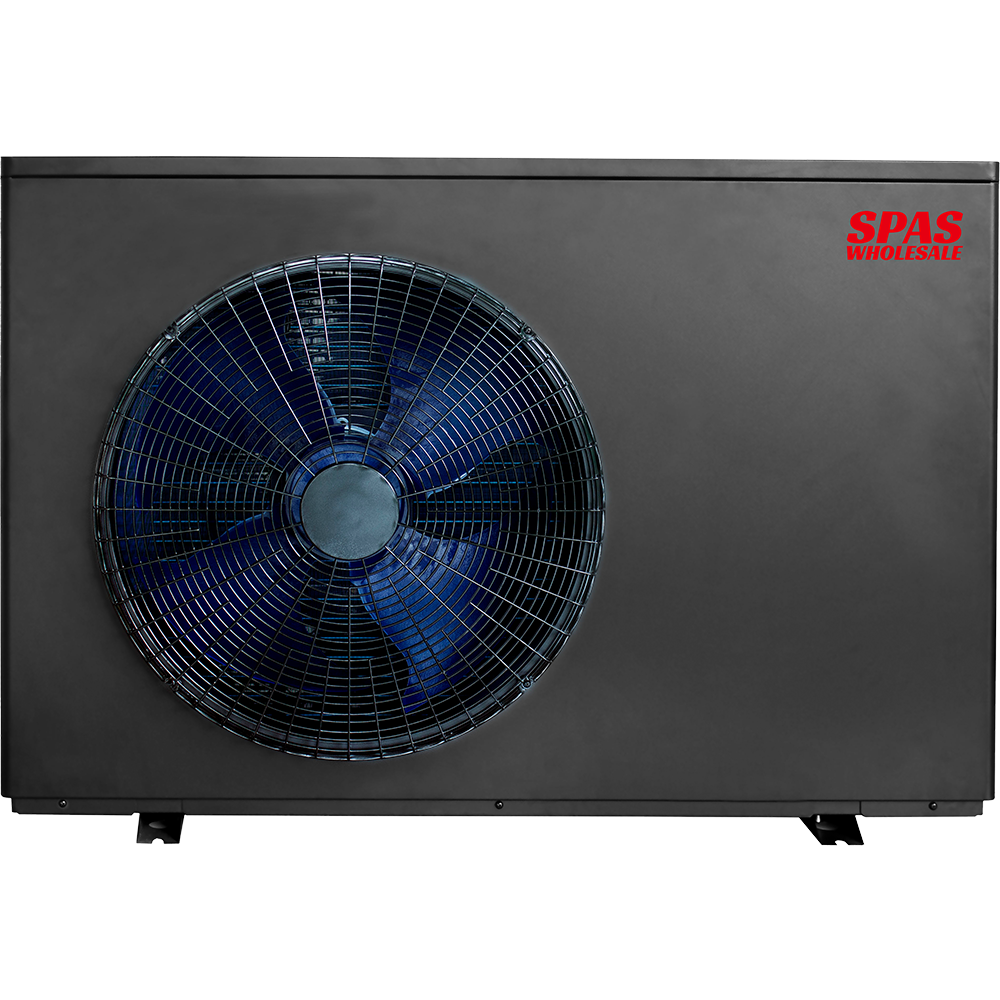
A heat pump is the most cost-effective way to heat a spa pool or swim spa. Instead of using an electric element to generate heat directly, a heat pump extracts warmth from the surrounding air and transfers it into the water — using roughly 70 percent less electricity to achieve the same temperature. For a spa that gets regular use, a heat pump pays for itself through reduced power bills.
ThermaSmart Spa Heat Pump
Our ThermaSmart model is designed for swim spas and larger spa pools. It keeps water warm even in cooler climates, allowing year-round use without high heating costs. The ThermaSmart integrates with your spa's existing control system and WiFi control is available — the Connect and Control Heat Pump WiFi guide is on our Manuals page.
Selected swim spa models in our current range include a free heat pump on Pro and Pro Max configurations. Check the individual product page or call 1300 185 338 to confirm what is included with the model you are considering.
How a Spa Heat Pump Works
A spa heat pump works on the same principle as a reverse-cycle air conditioner. It draws in ambient air, extracts heat energy from it, and transfers that heat into the spa water. Because it moves existing heat rather than generating it from scratch, a heat pump produces significantly more heating output per unit of electricity consumed compared to a standard electric element.
In practical terms, for every 1 kilowatt of electricity used, a heat pump can deliver 4 to 5 kilowatts of heat into the water. On a standard electric element, 1 kilowatt in equals 1 kilowatt of heat. The difference in running costs over a full year is meaningful, particularly for swim spas which hold significantly more water than a standard spa pool.
Is a Heat Pump Worth Adding to Your Spa?
Worth adding if you use your spa more than a few times per week, you are in Victoria, Tasmania, South Australia or anywhere with cool winters, or you have a swim spa with a larger water volume. A heat pump is also worth considering if your current power bills from spa heating are already noticeable.
Less critical if you are in Queensland or northern WA and mainly use your spa in warmer months, or if you have a compact 2 to 3 person spa with lower water volume.
That said, a heat pump is one of the more common additions our customers make in the first year of ownership once they see their initial power bills.