


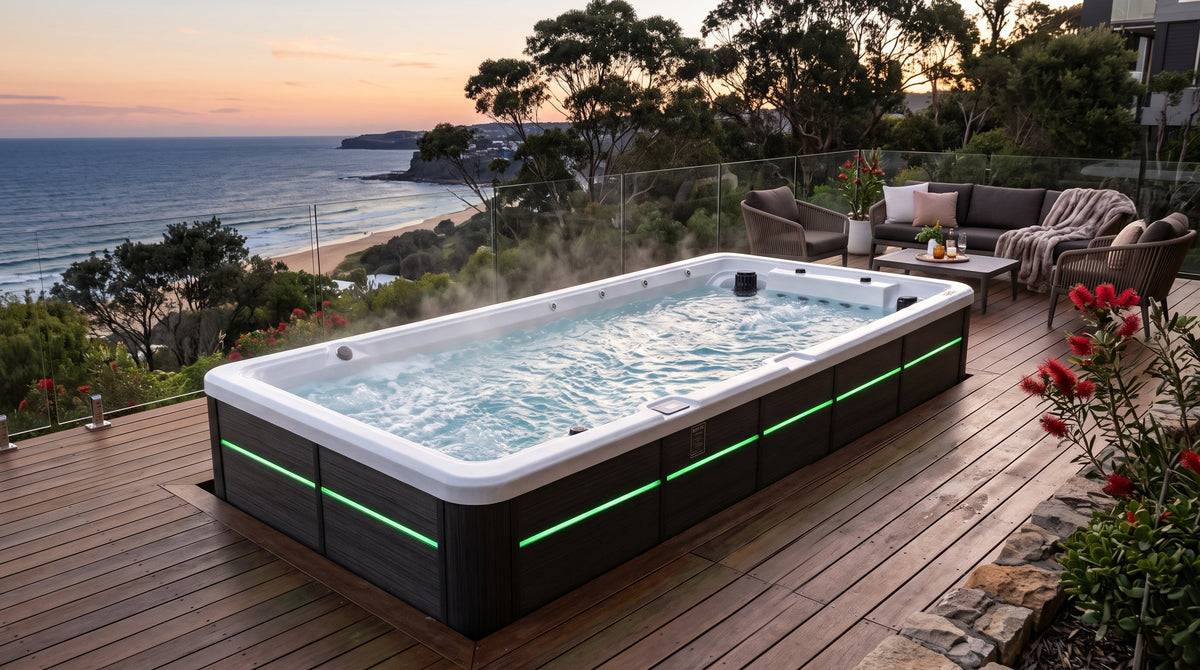
A plunge pool is a compact swimming pool designed primarily for cooling off, soaking, relaxing and enjoying the water in a smaller space.
It is normally significantly smaller than a conventional backyard swimming pool.
Unlike a lap pool, its main purpose is not swimming long distances.
That makes plunge pools especially relevant to compact suburban blocks, courtyards, narrow backyards, urban homes and homeowners who want water without sacrificing the entire outdoor area.
There is no single universal plunge-pool dimension.
The important characteristic is that it is compact relative to a conventional swimming pool.
Australian plunge-pool products on the market range from very small round designs through to rectangular pools approaching six metres in length.
The right size should come from the backyard and intended use rather than from trying to reach a particular definition.
The obvious use in warmer weather.
A deeper compact body of water can provide a comfortable place to sit or stand.
It provides usable water space without requiring the area of a large swimming pool.
A modern rectangular plunge pool can become a major landscape feature.
It can support movement and water-based activity, although the compact length limits conventional lap swimming.
| Feature | Plunge Pool | Conventional Pool |
|---|---|---|
| Backyard footprint | Smaller | Larger |
| Lap swimming | Limited | Better suited |
| Water volume | Usually lower | Higher |
| Landscaping impact | More compact | Larger project |
| Cooling / soaking | Excellent | Excellent |
| Exercise | Limited by size | More room |
| Small backyard suitability | Strong | Site dependent |
A plunge pool makes the most sense when the homeowner values compactness more than swimming length.
These products have different starting purposes.
A plunge pool starts as a swimming-pool concept.
A spa pool starts as a seated heated-water and massage product.
Spa pools normally include moulded seating, massage jets, pumps, heaters, filtration and controls.
A plunge pool can also be heated or fitted with jets, but those features depend on the design.
A swim spa is again a different category.
A swim spa is a manufactured self-contained product designed to generate water flow for stationary swimming.
It can also include massage seating, heating, filtration and electronic controls.
A conventional plunge pool generally does not provide resistance swimming as standard.
That creates a useful distinction:
Want compact pool-style relaxation → plunge pool
Want compact water space + stationary swimming → swim spa
The classic installation is an in-ground pool.
This can create a clean, integrated appearance but usually involves the most site work.
Potential project components include excavation, engineering, pool shell or concrete construction, drainage, plumbing, electrical, filtration, barriers, certification, paving or decking and landscaping.
For many buyers, the finished landscaping becomes almost as important as the pool itself.
Not every plunge pool needs to disappear into the ground.
Above-ground and partially raised designs can work particularly well on sloping sites, difficult excavation sites, elevated outdoor areas and architectural decks.
A plunge pool does not need to imitate a conventional in-ground pool to create a strong design result.
Works particularly well with modern architecture, decks, narrow blocks and linear outdoor areas.
Can work well in courtyards, compact square spaces and softer landscape designs.
Neither is inherently better.
The available space and surrounding architecture should lead the choice.
You can move and play in the water.
But normal lap swimming is limited by the length.
This is one of the main disadvantages buyers should understand before choosing a small pool.
If actual swimming is a high priority, a larger conventional pool or resistance-current swim spa may be a better fit.
Yes, depending on the system selected.
Possible heating options vary by pool and project.
But heating affects both initial equipment cost + ongoing energy use.
A pool intended mainly for summer cooling has a very different operating profile from one intended for year-round warm-water use.
It is not designed for long lap swimming.
Small does not automatically mean cheap.
A small pool is still a pool for regulatory purposes where the relevant rules apply.
Temperature-control equipment depends on the project.
Precast or fibreglass shells may still need crane access.
For buyers who want a longer rectangular water area but also want exercise and massage, consider comparing:
Express Lane 4.5m — 4.5 × 2.28 × 1.52m
and
Express Lane 6m — 6.0 × 2.28 × 1.52m
These are swim spas, not plunge pools.
The distinction should remain clear.
Their relevance comes from providing a similar compact rectangular backyard concept while adding resistance swimming, heating and hydrotherapy functionality.
Cooling, relaxing and recreation in a smaller water area than a conventional swimming pool.
Depth varies considerably by product and design. Do not use one generic depth figure for every plunge pool.
It can use less space and water, but the final installed cost depends on construction type, access, excavation, equipment and landscaping.
Yes, if suitable heating equipment is included.
No. A swim spa is a self-contained product designed around generated swim current and spa functionality.
It can be. Compact pools are particularly relevant to courtyards and smaller Australian blocks.
A plunge pool makes the most sense when you want a real pool experience but do not need the length of a full swimming pool.
Before committing, compare space → intended use → pool type → access → construction → heating → safety → total project cost.
For a national buying comparison, continue to our Plunge Pool Australia guide.
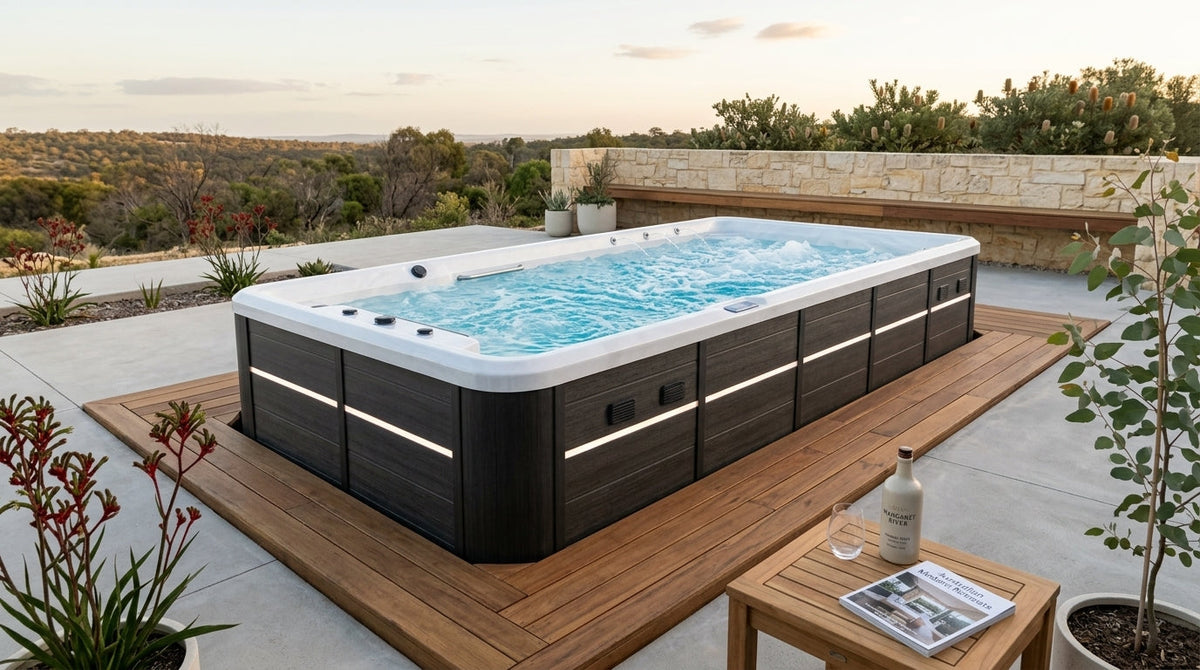
Plunge Pool Australia: Complete Buyer’s Guide for Australian Backyards 2026
Planning a plunge pool in Australia? Compare pool types, small-backyard options, climate, installation, heating, costs and swim spa alternatives before you build.
What Is a Plunge Pool? Sizes, Uses, Pros, Cons & Alternatives
What is a plunge pool? Learn how plunge pools differ from swimming pools, spas and swim spas, including sizes, uses, installation, benefits and limitations.
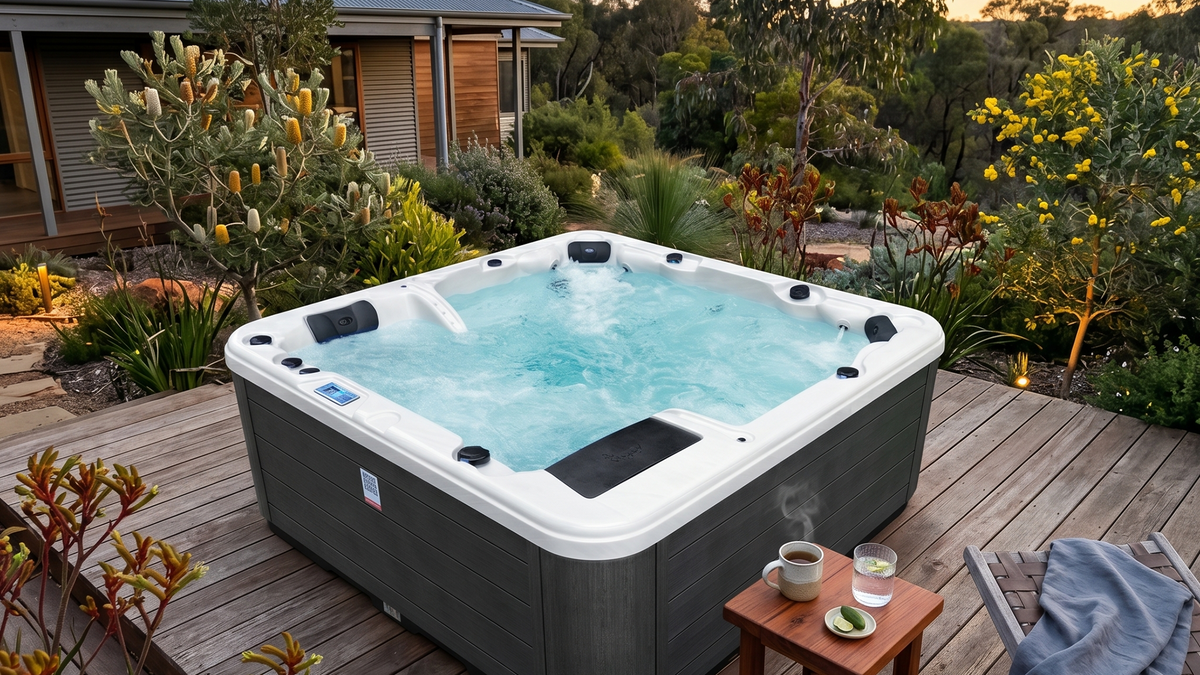
Portable Hot Tub Australia: Inflatable vs Rigid Hot Tub Buying Guide
Looking for a portable hot tub in Australia? Compare inflatable and rigid self-contained hot tubs, including size, power, massage, installation, insulation and warranty.

Mon–Fri: 9 am–9 pm
Sat–Sun: 9 am–3 pm
© 2026 Spas Wholesale. Proudly Serving Australian Families.


Plunge Pool Australia: Complete Buyer’s Guide for Australian Backyards 2026
Plunge Pool Australia: Complete Buyer’s Guide for Australian Backyards 2026