


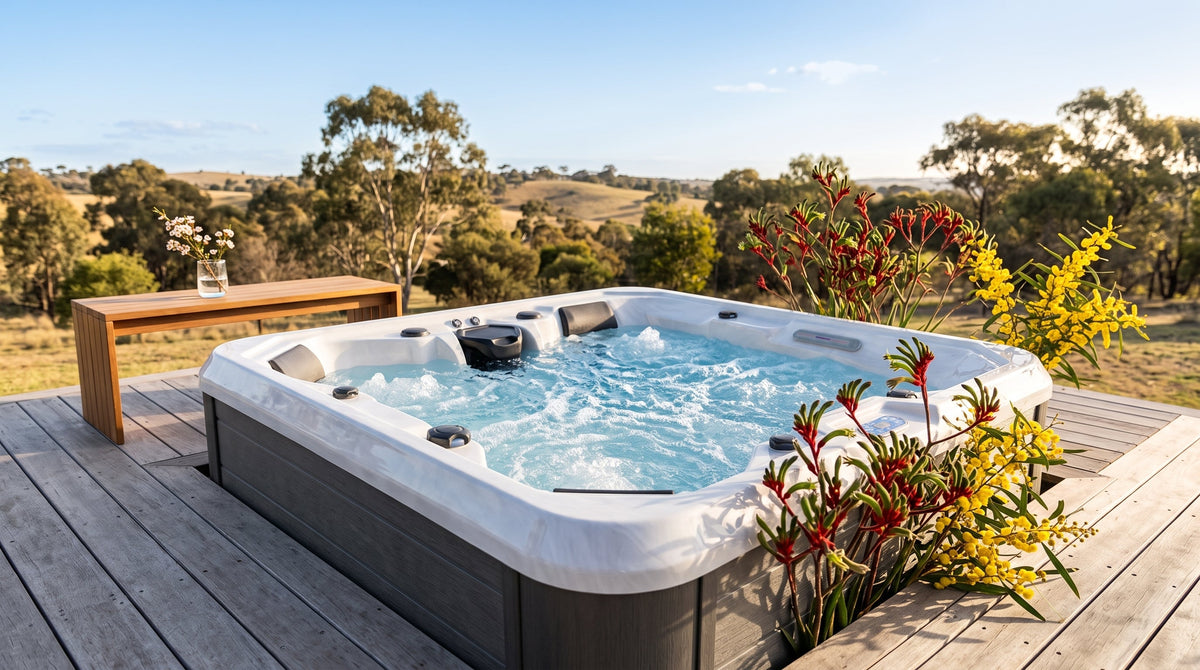
If you are searching for a portable spa pool in Australia, the word “portable” can be slightly misleading.
A proper portable spa pool is not necessarily lightweight enough to pick up and move whenever you like. In the spa industry, the term generally refers to a factory-built, self-contained spa that arrives as a complete unit rather than being permanently constructed into the ground.
That means the shell, cabinet, pumps, heater, filtration and control equipment are integrated into the spa.
For many Australian homes, this makes a portable spa pool one of the simplest ways to add a permanent-feeling backyard spa without building a traditional in-ground concrete spa.
A portable spa pool is a pre-manufactured spa that is delivered to your property as a complete unit.
Unlike an in-ground spa, it normally does not require the spa shell itself to be constructed on site.
Depending on the model, a rigid portable spa pool can include:
Once positioned on a suitable base, connected to the correct electrical supply and filled with water, the spa can be commissioned for use.
This is also why you will often see the terms portable spa, portable hot tub and portable spa pool used for similar products in Australia.
These are not the same product category.
An inflatable spa is usually designed around a flexible inflatable wall and is often purchased for lower-cost or temporary use.
A rigid portable spa pool is a substantially more permanent backyard product.
| Feature | Rigid Portable Spa Pool | Inflatable Spa |
|---|---|---|
| Construction | Solid shell and cabinet | Inflatable walls |
| Hydrotherapy | Dedicated massage jets and pumps, depending on model | Usually simpler jet or air systems |
| Insulation | Model dependent, often integrated | Usually more basic |
| Seating | Moulded ergonomic seating on many models | Often open-floor interior |
| Equipment | Integrated into cabinet | Often external equipment pack |
| Intended use | Long-term backyard installation | More temporary or flexible use |
Neither option is automatically right or wrong. The important question is how frequently you intend to use the spa and what level of hydrotherapy, comfort, insulation and longevity you expect.
Portable does not mean the spa should be moved while full.
Water is extremely heavy, and a filled spa can weigh well over a tonne depending on its size.
Instead, “portable” means the spa can potentially be relocated after it has been:
This can be useful if you later renovate your backyard or move home, but you should still treat the spa as a substantial outdoor installation rather than temporary furniture.
A portable spa needs a flat, stable and appropriately load-bearing surface.
Depending on the property and model, that could include an engineered concrete slab, suitably designed reinforced deck or another base approved for the spa and site.
Do not judge the required strength by the empty spa weight alone.
You need to consider:
spa + water + occupants.
If the spa is being installed on an elevated deck or structure, obtain appropriate professional advice before installation.
It depends on the exact model.
Some smaller products may use plug-in electrical connections, while larger or higher-performance spas can require dedicated electrical circuits or hard-wired connections.
Do not assume that every portable spa is simply “plug and play”.
Before purchasing, check:
Spas Wholesale publishes electrical requirements by model, and the exact current product specification should always be checked before installation.
See Spa Electrical Requirements by Model
A compact two- or three-person spa can suit smaller courtyards, patios and households where most use will involve one or two people.
A five- to seven-person spa generally offers greater flexibility for family use while still fitting many Australian backyards.
Larger spas with multiple upright seats and open social layouts may make more sense than choosing a model mainly because it has one large lounge.
Do not use advertised seat count alone. Look at the actual internal layout, leg room, seat depths and where the jets are positioned.
When comparing portable spa pools, focus on the complete product rather than one headline specification.
Hydrotherapy: jet position, pump configuration and seat ergonomics matter more than jet count alone.
Insulation: good heat retention can have a significant effect on how efficiently the spa maintains temperature.
Control system: check the exact controls published for the model you are considering.
Frame and base construction: these are important long-term structural areas.
Water care: compare the filtration and treatment equipment published for the specific model.
Cover: an appropriately fitted insulated cover helps reduce heat loss and keeps debris out when the spa is not in use.
Specifications vary by model, so use the live product page rather than assuming every spa has the same equipment.
Usually, yes.
A self-contained spa generally avoids much of the excavation and structural pool construction associated with a permanent in-ground installation.
However, “easier” does not mean “no planning required”.
You still need to consider:
Local rules vary by state, council and installation type, so confirm the requirements that apply to your property before installation.
One advantage of buying a factory-built spa is that you can compare the exact model before committing to a large on-site construction project.
Spas Wholesale operates an online, direct online sales model with no independent retail middlemen and no traditional showroom mark-ups.
Browse the current Spa Pools range and compare dimensions, seating, pumps, controls, electrical requirements, warranty and current stock.
No. In the spa industry, a portable spa often refers to a rigid, self-contained factory-built spa. Inflatable spas are a separate product category.
Potentially, yes, once it has been fully drained and safely disconnected. Larger spas normally require appropriate moving equipment and professional handling.
It may be possible, but the deck must be capable of supporting the total loaded weight of the spa, water and occupants. Obtain appropriate structural advice.
Most self-contained spa pools are filled rather than permanently connected to household water plumbing, but exact installation requirements vary by model.
There is no single Australia-wide answer. Pool and spa safety, fencing and planning requirements vary by state, council and installation. Confirm the requirements for your property before installation.
Spas Wholesale supplies spa pools Australia-wide from five Australian warehouse locations, with free warehouse pickup available by arrangement.
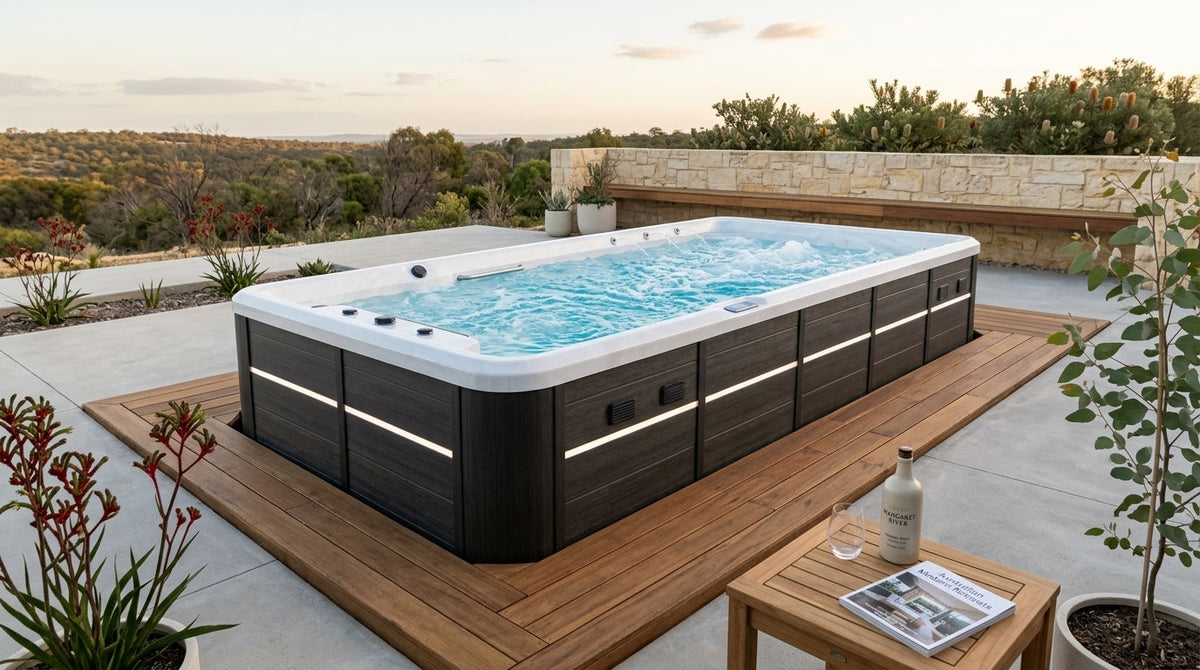
Plunge Pool Australia: Complete Buyer’s Guide for Australian Backyards 2026
Planning a plunge pool in Australia? Compare pool types, small-backyard options, climate, installation, heating, costs and swim spa alternatives before you build.
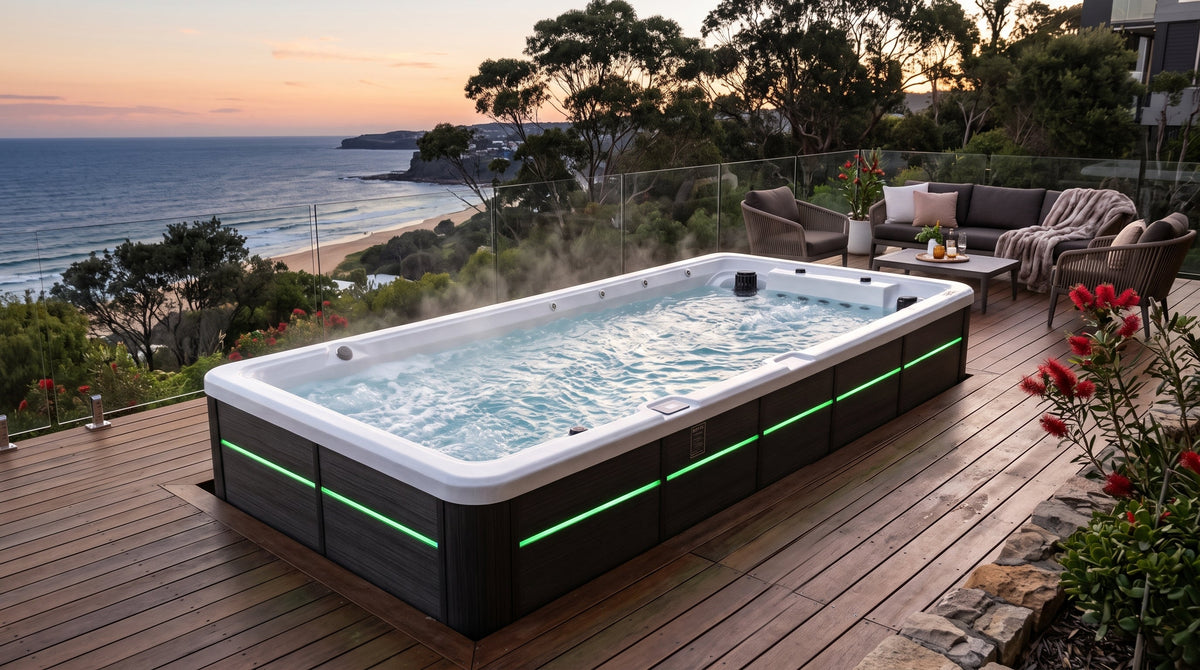
What Is a Plunge Pool? Sizes, Uses, Pros, Cons & Alternatives
What is a plunge pool? Learn how plunge pools differ from swimming pools, spas and swim spas, including sizes, uses, installation, benefits and limitations.
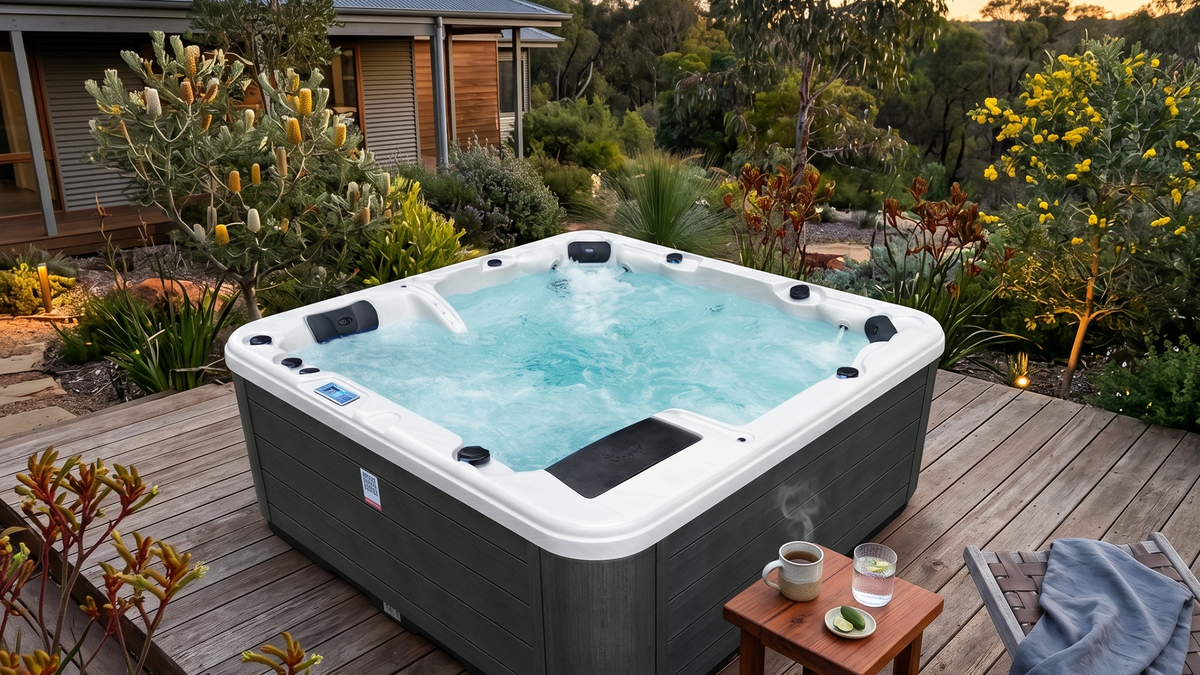
Portable Hot Tub Australia: Inflatable vs Rigid Hot Tub Buying Guide
Looking for a portable hot tub in Australia? Compare inflatable and rigid self-contained hot tubs, including size, power, massage, installation, insulation and warranty.

Mon–Fri: 9 am–9 pm
Sat–Sun: 9 am–3 pm
© 2026 Spas Wholesale. Proudly Serving Australian Families.


Spa Deals Australia: How to Find a Genuine Spa Deal
Portable Spa Australia: Price, Power, Delivery & Setup Guide